Aluminum is transforming the automotive industry through weight reduction and improved fuel efficiency. Modern vehicles increasingly use aluminum for body panels, chassis components, heat exchangers, battery enclosures and trailer structures. Aluminum's high strength-to-weight ratio allows vehicles to carry more payload while reducing fuel consumption and emissions.
We supply aluminum sheet, plate and profiles to truck body builders, trailer manufacturers, automotive tier suppliers and electric vehicle battery producers across Southeast Asia, Mexico and the Middle East.
Truck Bodies and Cargo Boxes
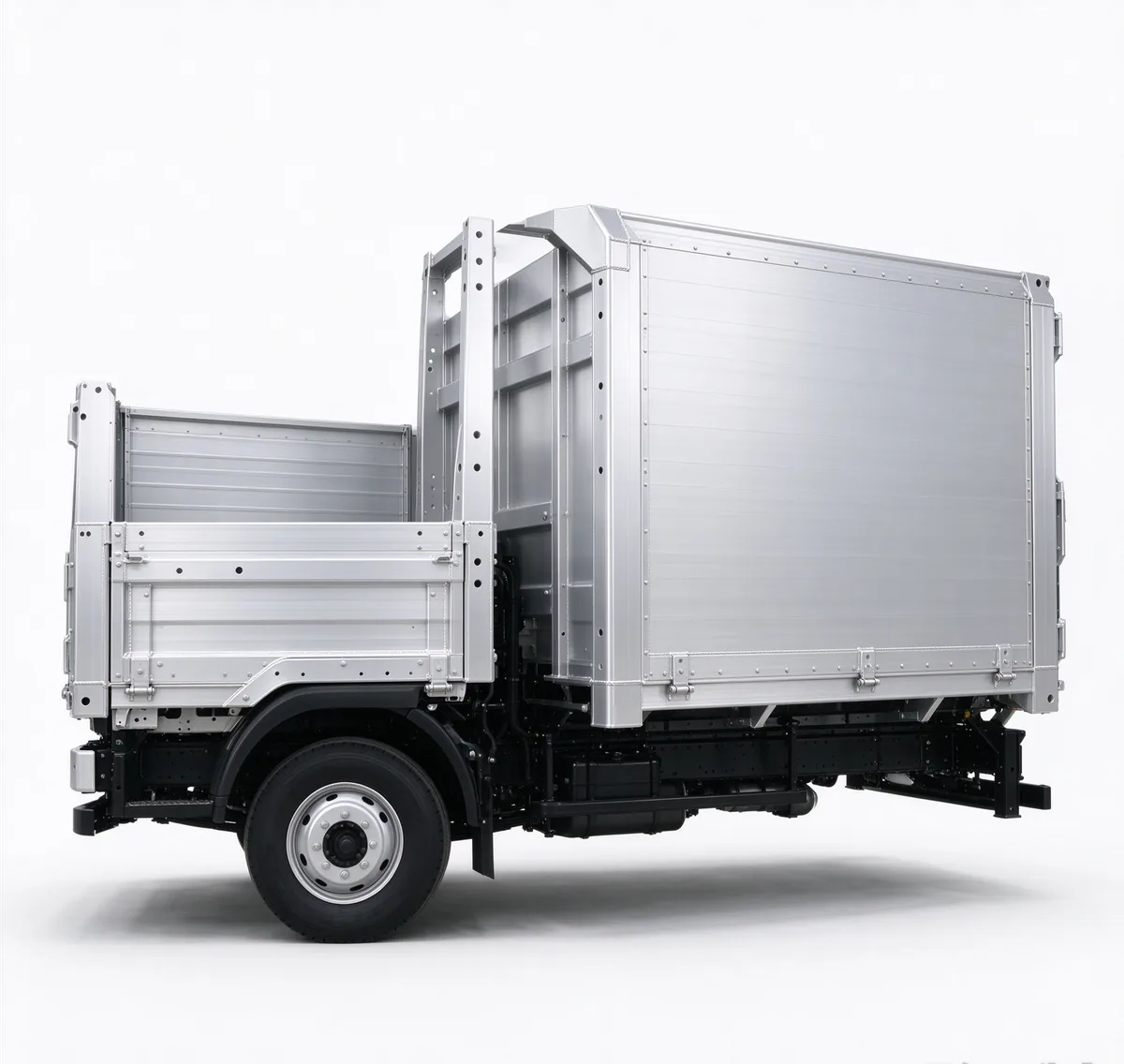
Aluminum truck bodies and van bodies offer significant weight savings over steel, allowing higher payload capacity without exceeding gross vehicle weight limits. 5052-H32 aluminum sheet is the standard material for refrigerated truck bodies, dry freight van panels and box truck skins. 5052 provides good strength (215 MPa tensile), excellent corrosion resistance and formability for roll-forming corrugated panels.
Trailer manufacturers use 5083-H116 or 5083-H321 sheet for heavy-duty applications like dump truck bodies, tanker trucks and marine transport trailers. 5083 delivers higher strength (305 MPa tensile) than 5052 and excellent weldability, making it suitable for welded structural assemblies.
Truck body side panels are typically 1.5 – 3.0 mm thick 5052-H32 sheet, roll-formed into corrugated profiles for stiffness. Floor panels use 3 – 6 mm 5083 or 6061-T6 plate with checkered (tread plate) surface for slip resistance. Corner posts and roof bows are extruded from 6063-T5 or 6061-T6 aluminum.
- Side panels: 5052-H32 sheet 1.5 – 3.0 mm, corrugated for stiffness
- Floor panels: 5083-H116 or 6061-T6 3 – 6 mm, checkered surface
- Structural extrusions: 6061-T6 profiles for corner posts, roof bows, door frames
- Refrigeration units: 5052 or 3004 sheet for insulated panel skins
Heat Exchangers and Radiators
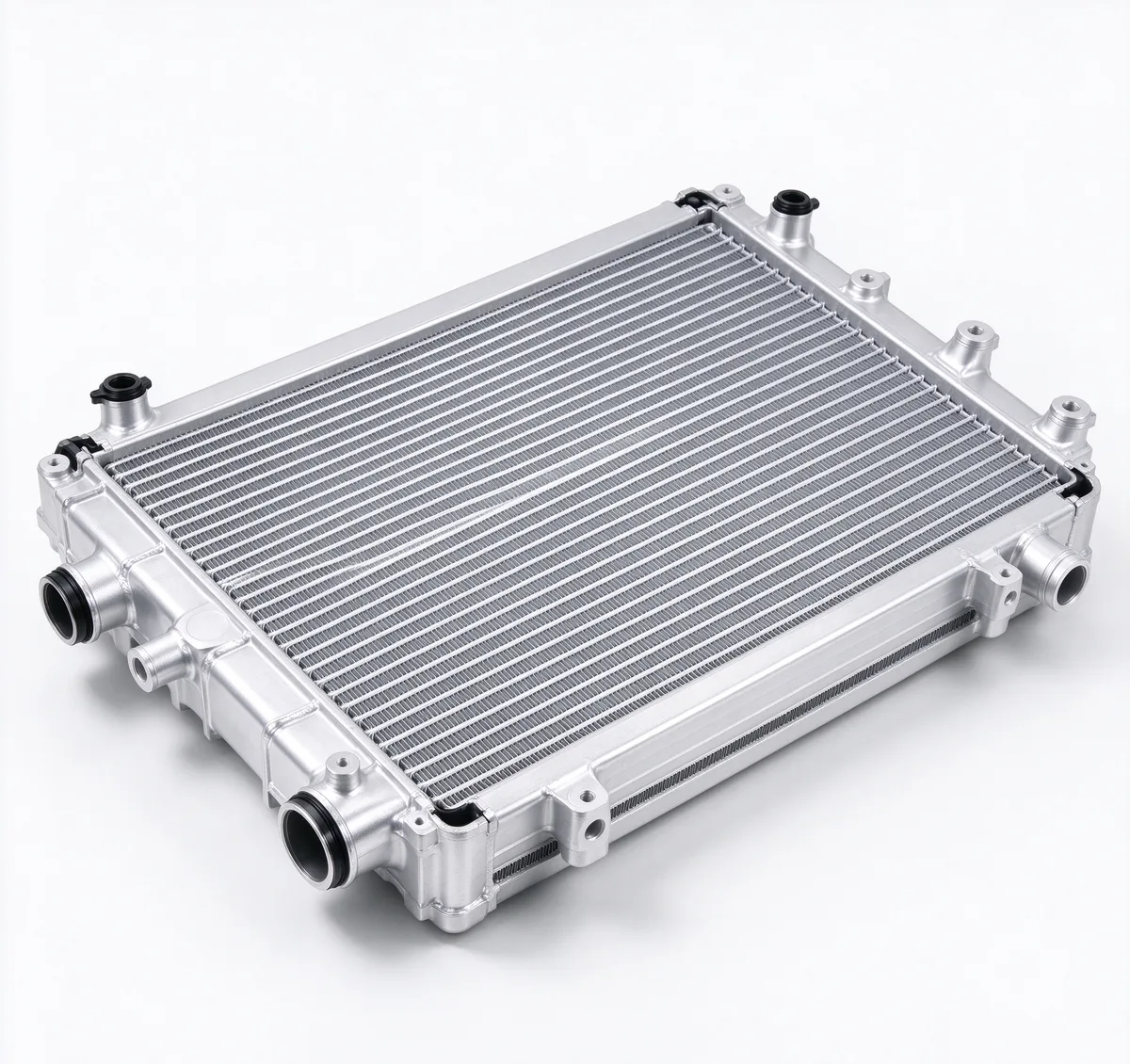
Automotive heat exchangers—radiators, condensers, evaporators, intercoolers and oil coolers—use aluminum for its excellent thermal conductivity and corrosion resistance. 3003 aluminum foil is the standard material for heat exchanger fins, typically 0.08 – 0.15 mm thick in O, H22 or H24 temper.
Fins are often supplied with a hydrophilic coating (blue, gold or clear) that spreads condensate into a thin film, improving heat transfer and reducing water bridging between fins. The fins are mechanically bonded or brazed to aluminum tubes carrying coolant or refrigerant.
Radiator and condenser tubes are typically drawn from 3003-O tubing in flat or round cross-sections. Header tanks and side plates use 6061-T6 or 3003-H14 sheet. The entire assembly is furnace-brazed in a controlled-atmosphere oven using a brazing sheet (aluminum core clad with Al-Si brazing alloy).
Electric Vehicle Battery Components
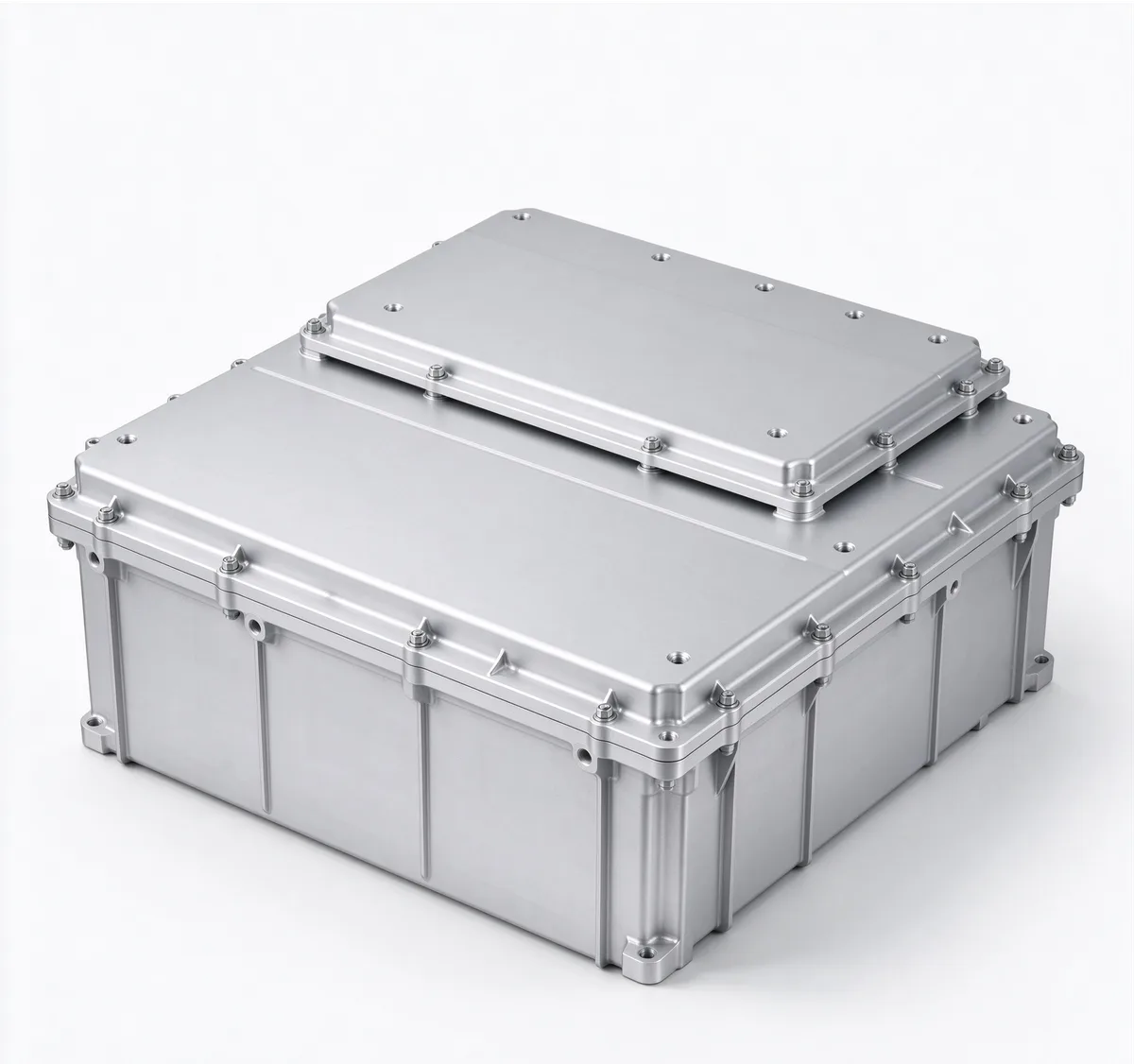
Electric vehicle battery packs use aluminum for structural enclosures, cooling plates and current collector foils. 1060-H18 aluminum foil serves as the cathode current collector in lithium-ion cells, typically 12 – 20 µm thick with a tight thickness tolerance and clean surface for coating with cathode material (LiCoO₂, NCA, NMC).
Battery pack enclosures and cooling plates use 6061-T6 sheet or 6061-T6 extrusions for their high strength, good thermal conductivity and weldability. The cooling plate channels liquid coolant between cell modules to maintain optimal temperature. Enclosure covers protect the battery pack from impact and environmental exposure.
Battery module frames and cell spacing brackets are fabricated from 6061-T6 profiles or stamped from 6061-T6 sheet. Some designs use 3003 aluminum for module cases where moderate strength and excellent formability are required.
- Cathode foil: 1060-H18 12 – 20 µm, high purity for conductivity
- Cooling plates: 6061-T6 sheet 3 – 6 mm, friction stir welded or brazed
- Enclosure: 6061-T6 plate 5 – 10 mm, welded assembly
- Module frames: 6061-T6 extrusions, bolted or welded
Chassis and Structural Components
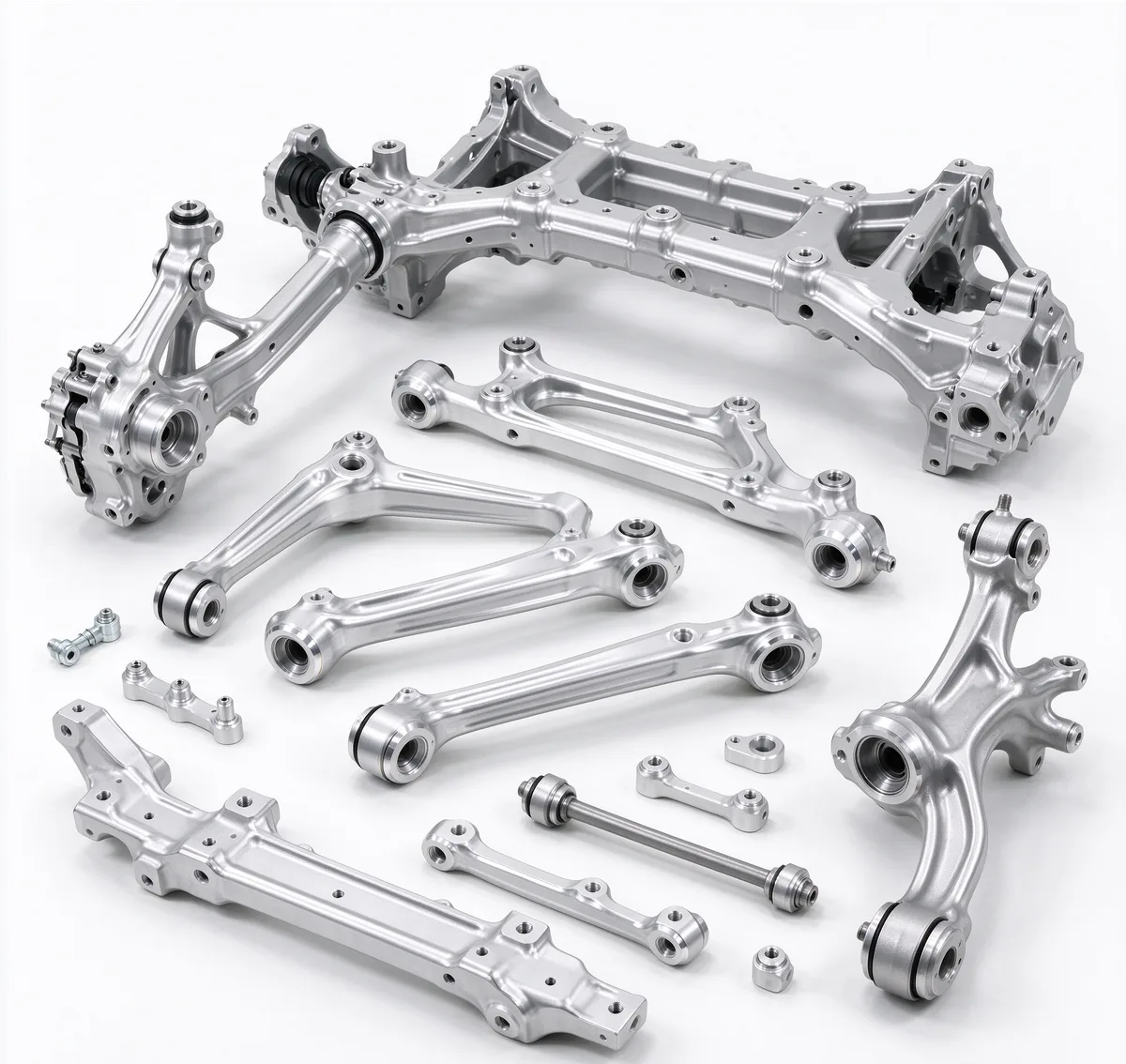
High-performance and luxury vehicles use aluminum for chassis components, suspension parts and body structures to reduce unsprung weight and improve handling. 6061-T6 extrusions are used for subframe rails, cross members and crash structures. 6061 provides good strength (≥260 MPa tensile), weldability and the ability to be formed into complex extruded profiles with internal reinforcements.
Automotive suspension components like control arms, knuckles and subframe mounts are often cast or forged from aluminum alloys like A356-T6 (cast) or 6061-T6 / 7075-T6 (forged). Sheet aluminum is less common for suspension due to fatigue concerns, though 5083 or 6061 sheet is used for skid plates and belly pans.
Performance car manufacturers use 7075-T6 aluminum for ultra-high-strength applications like roll cage tubes, where weight savings and maximum strength are critical. However, 7075's poor weldability limits its use; most automotive structures use 6061-T6 for its balance of strength and weldability.
- Subframes: 6061-T6 extrusions, MIG welded or adhesive bonded
- Control arms: 6061-T6 or A356-T6 cast/forged (not sheet/profile)
- Skid plates: 5083-H116 or 6061-T6 3 – 6 mm
- Roll cages: 7075-T6 tubes, TIG welded (motorsport only)
Automotive Aluminum in Key Markets
Southeast Asia is a major automotive manufacturing hub. Thailand produces 2+ million vehicles annually, with truck and pickup production dominating. Vietnam and Indonesia are growing assembly markets. These countries import aluminum sheet and profiles for truck bodies, heat exchangers and structural components.
Mexico is the world's 7th largest vehicle producer, with extensive automotive supply chains centered in Querétaro, Guanajuato and Nuevo León. Mexican suppliers use 5052 and 5083 sheet for truck beds and trailer bodies, 3003 foil for heat exchangers, and 6061 extrusions for chassis and battery enclosures.
The Middle East and Africa import vehicles and automotive aluminum for local assembly, trailer manufacturing and aftermarket truck body fabrication. 5052 sheet for refrigerated truck bodies and 6061 profiles for trailer frames are key products in these markets.
Need Automotive Grade Aluminum?
Contact our team for material specifications, certifications and export quotes.
Request a Quote