Aluminum plays a critical role in power generation, transmission and renewable energy systems due to its excellent electrical and thermal conductivity, light weight and corrosion resistance. From solar panel mounting structures to electrical busbars, transformer enclosures and power electronics heat sinks, aluminum enables efficient and reliable energy infrastructure.
We supply aluminum profiles, sheet, bar and conductor alloys to solar installers, electrical equipment manufacturers, transformer builders and power electronics companies across Southeast Asia, Middle East and Africa.
Solar Panel Mounting Systems
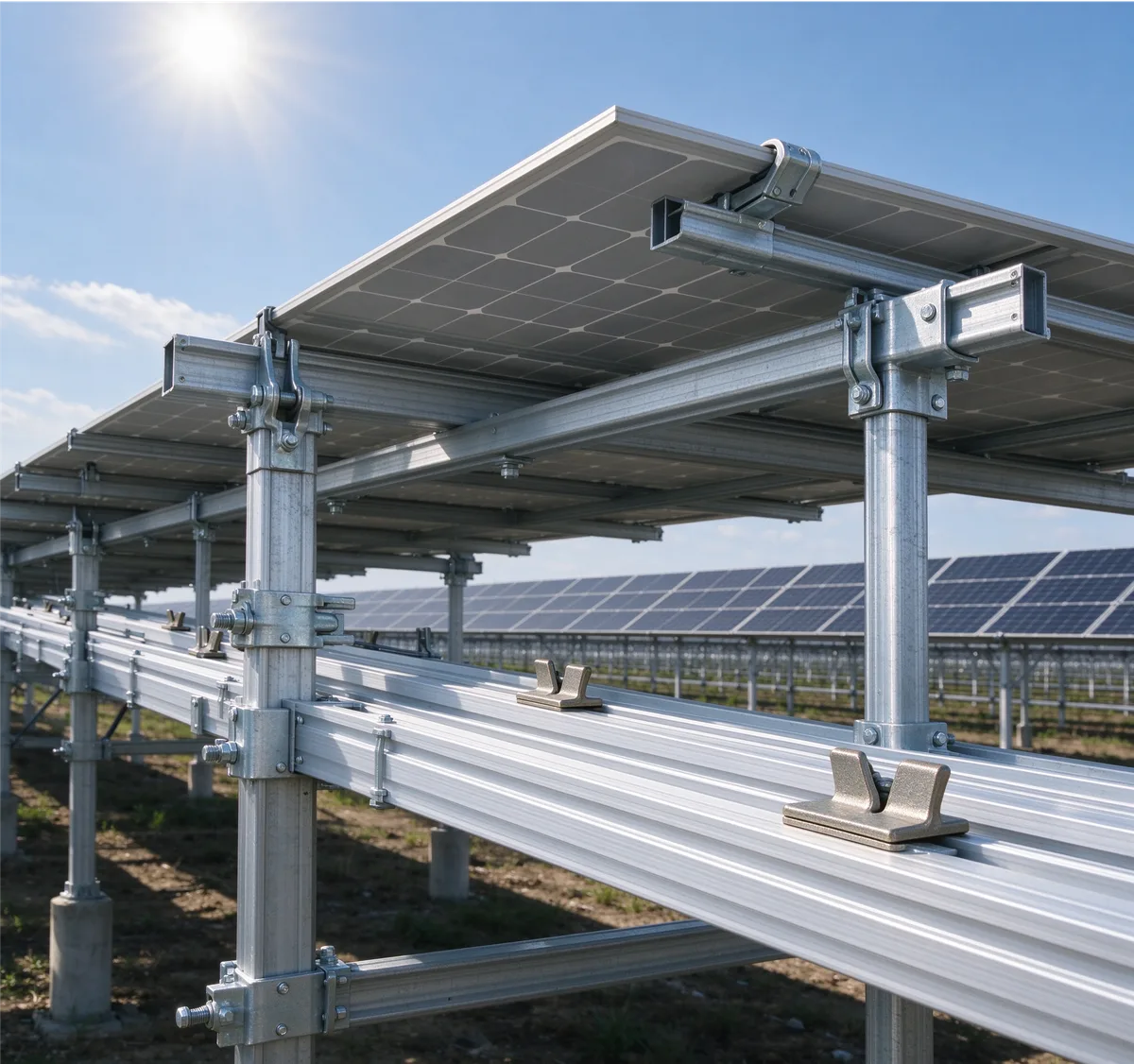
Solar photovoltaic (PV) mounting structures use extruded aluminum for their frames, rails and brackets. 6063-T5 or 6063-T6 aluminum profiles are the industry standard for solar mounting due to their excellent corrosion resistance, light weight, ease of installation and 25+ year service life matching the solar panel warranty.
Solar mounting rails are typically custom-extruded 6063 profiles with integrated slots or channels for panel clamps and wire management. Rail dimensions range from 30×40 mm for residential rooftop systems up to 60×80 mm or larger for ground-mount utility-scale solar farms. Wall thickness is typically 2.0 – 3.0 mm for structural rigidity and wind load resistance.
Solar mounting systems are installed in harsh outdoor environments—rooftops, deserts, coastal areas—with exposure to UV radiation, temperature cycling, wind, rain and salt spray. 6063 aluminum naturally forms a protective oxide layer that resists atmospheric corrosion. Anodized finish (clear or black, 10 – 20 µm) provides additional corrosion and UV resistance. Powder coating is used for aesthetic rooftop installations. 6005-T5 aluminum is also used for solar mounting rails where higher strength is required.
- Mounting rails: 6063-T5/T6 custom profiles, 30×40 to 80×100 mm, or 6005-T5 for high-strength applications
- Roof brackets: 6063-T5 or cast aluminum, anodized or powder coated
- Ground-mount posts: 6063-T6 or 6061-T6 heavy-duty extrusions
- Panel frames: 6063-T5 extruded frames, anodized silver
Electrical Conductors and Busbars
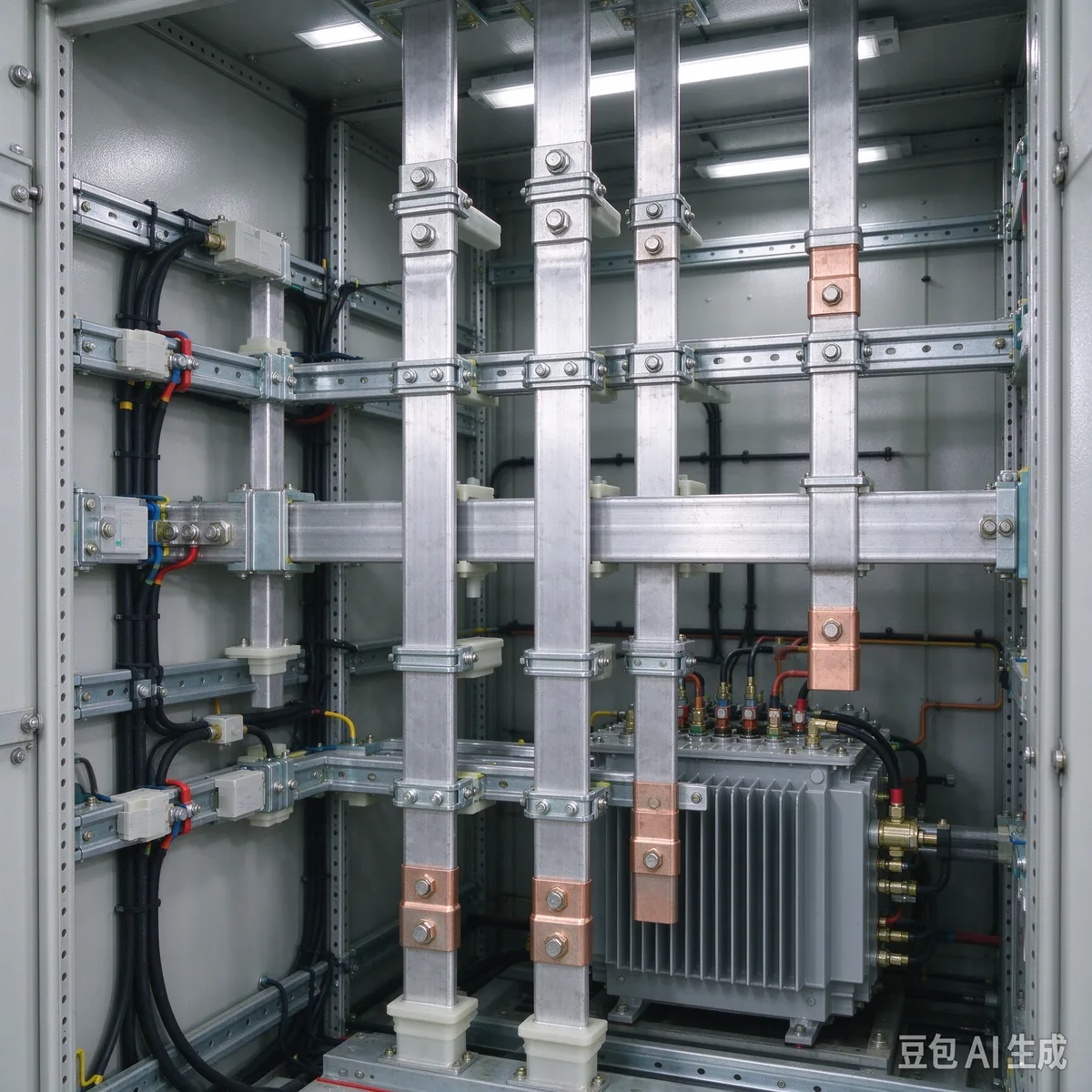
Aluminum is the second-most conductive common metal after copper (61 – 62% IACS for high-purity aluminum vs. 100% IACS for pure copper) but weighs only 30% as much. This makes aluminum the standard material for high-voltage transmission lines, electrical busbars, and large-current conductors where weight savings justify the larger cross-section needed to match copper ampacity.
Electrical conductor aluminum uses specialized high-conductivity alloys. 1350-H19 aluminum (99.50% minimum purity) is the standard for overhead transmission wire and cable. For extruded busbars and bus tubes, 6101-T6 (Al-Mg-Si alloy heat treated for conductivity) and 6201-T81 provide 52 – 56% IACS conductivity combined with good mechanical strength. 1050 and 1060 aluminum are also used for transformer windings and electrical strip applications.
Busbars are extruded from 6101-T6, machined from 1350 bar stock, or fabricated from 6063-T6 where conductivity requirements are less critical. Standard busbar cross-sections include rectangular bars (e.g. 5×40 mm, 10×80 mm), round bars and custom profiles with mounting holes or connection tabs. The bars are typically left bare (mill finish) or tin-plated for improved electrical contact and corrosion resistance in harsh environments.
- Busbars: 6101-T6 or 1350 bar, rectangular or custom profiles, or 6063-T6 bar where acceptable
- Transformer strip: 1050 foil 0.1 – 0.3 mm, wound coils for distribution transformers
- Cable: 1350-H19 or 6201-T81 aluminum wire (not sheet/profile product)
- Enclosures: 6063-T5 profiles or 5052 sheet for electrical boxes
Heat Sinks for Power Electronics
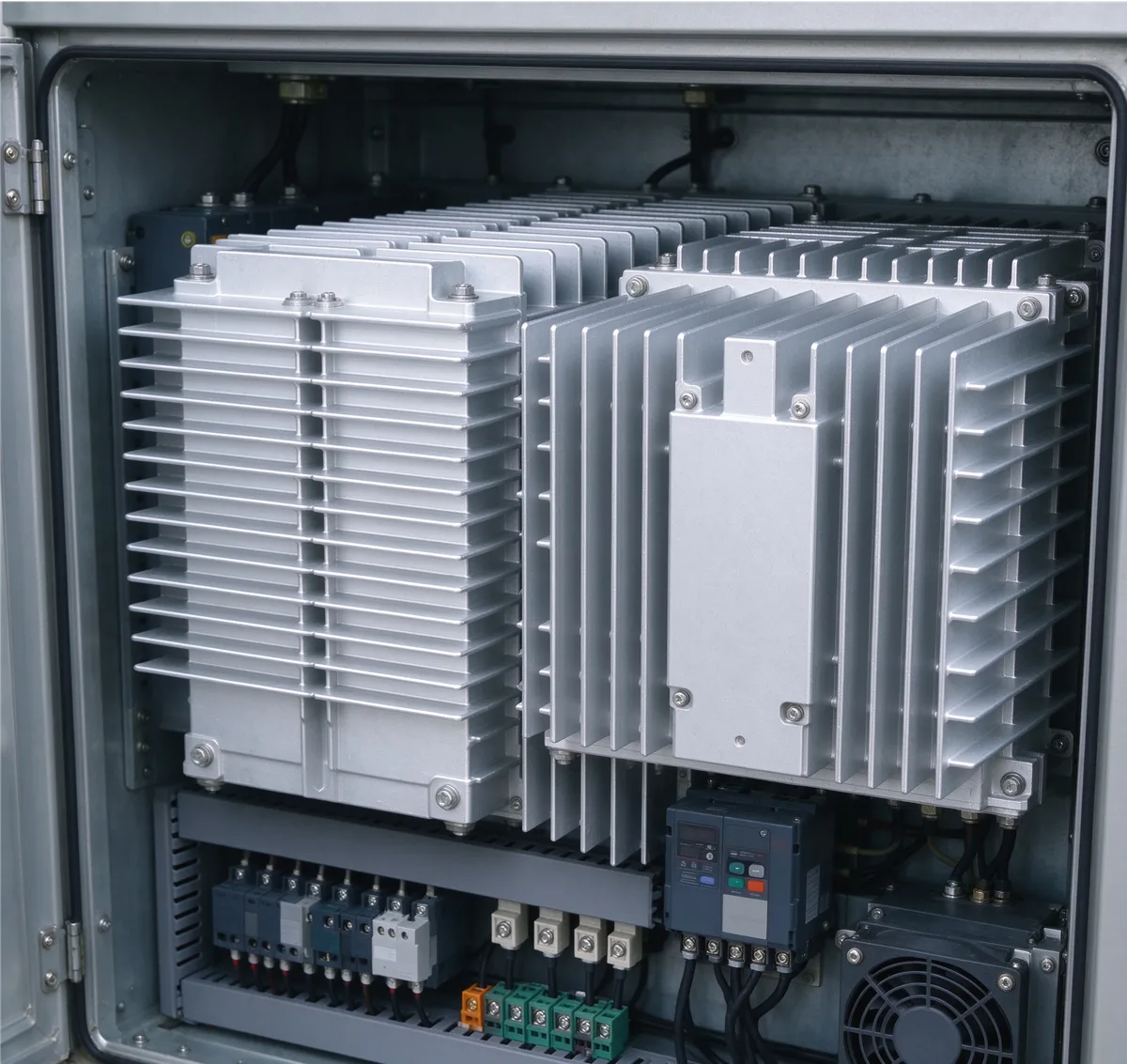
Power electronics—inverters, motor drives, power supplies, LED drivers—generate significant heat that must be dissipated to prevent component failure. Aluminum heat sinks use the metal high thermal conductivity (200 – 220 W/m·K for 6063) to transfer heat from semiconductor devices to the surrounding air.
6063-T5 aluminum is the standard alloy for extruded heat sinks. The alloy excellent extrudability allows complex fin geometries—closely-spaced parallel fins, pin fins, or custom shapes—to maximize surface area for heat dissipation. Fin spacing typically ranges from 6 – 10 mm for natural convection heat sinks and 2 – 4 mm for forced-air cooling. Tighter fin spacing increases surface area but restricts airflow.
Heat sink extrusions are typically supplied in 3 – 6 meter lengths, then cut to size and machined with mounting holes or tapped threads. Surface finishes include mill finish (standard), black anodized (Type II, 10 – 15 µm, improves emissivity for radiation cooling), or chemical conversion coating. Large power electronics may use cold plates—6061-T6 plate with internal coolant channels, friction-stir welded or vacuum-brazed.
- Extruded heat sinks: 6063-T5 custom fin profiles, natural or forced convection
- LED heat sinks: 6063-T5 round or rectangular profiles, black anodized
- Cold plates: 6061-T6 plate 5 – 10 mm, FSW or brazed coolant channels
- Thermal conductivity: 200+ W/m·K for 6063, suitable for most power electronics
Transformer Enclosures and Windings
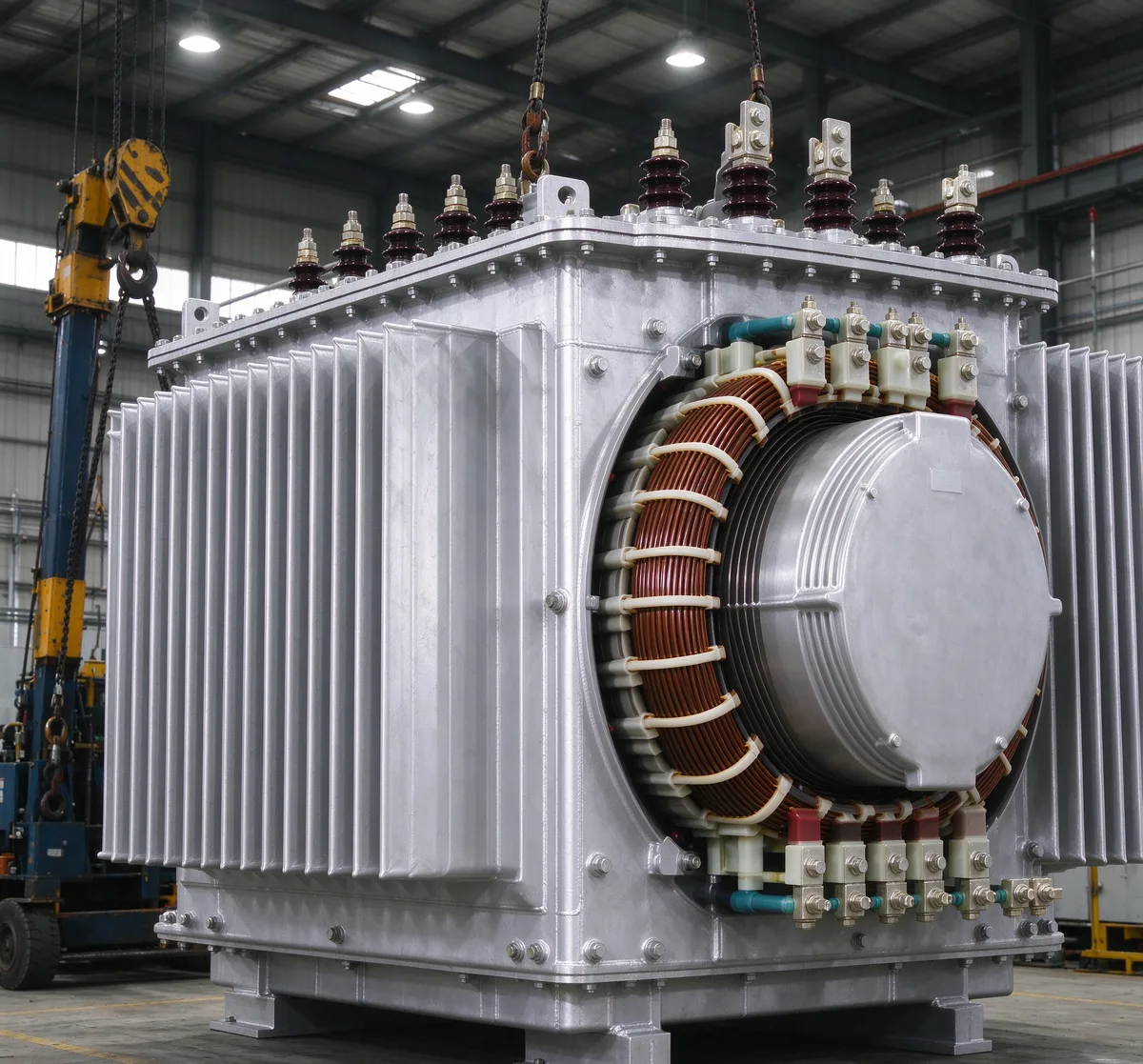
Electrical transformers use aluminum for windings (in distribution and dry-type transformers), enclosure tanks and cooling fins. High-purity aluminum strip or foil—1050 or 1060 aluminum 0.1 – 0.3 mm thick—is wound into coils for transformer secondary windings in distribution transformers and dry-type transformers. Aluminum windings are lighter and less expensive than copper, though they require a larger cross-section to achieve the same ampacity. Large power transformers typically use copper windings.
Dry-type transformer enclosures and pad-mount transformer cabinets are fabricated from 5052-H32 or 6061-T6 aluminum sheet 2 – 6 mm thick. Aluminum enclosures offer lighter weight for easier installation, natural corrosion resistance (no painting required), and better thermal conductivity for cooling. Oil-filled power transformer tanks are typically constructed from steel due to the size and weight of the oil and core; aluminum is not commonly used for large oil-filled transformer tanks.
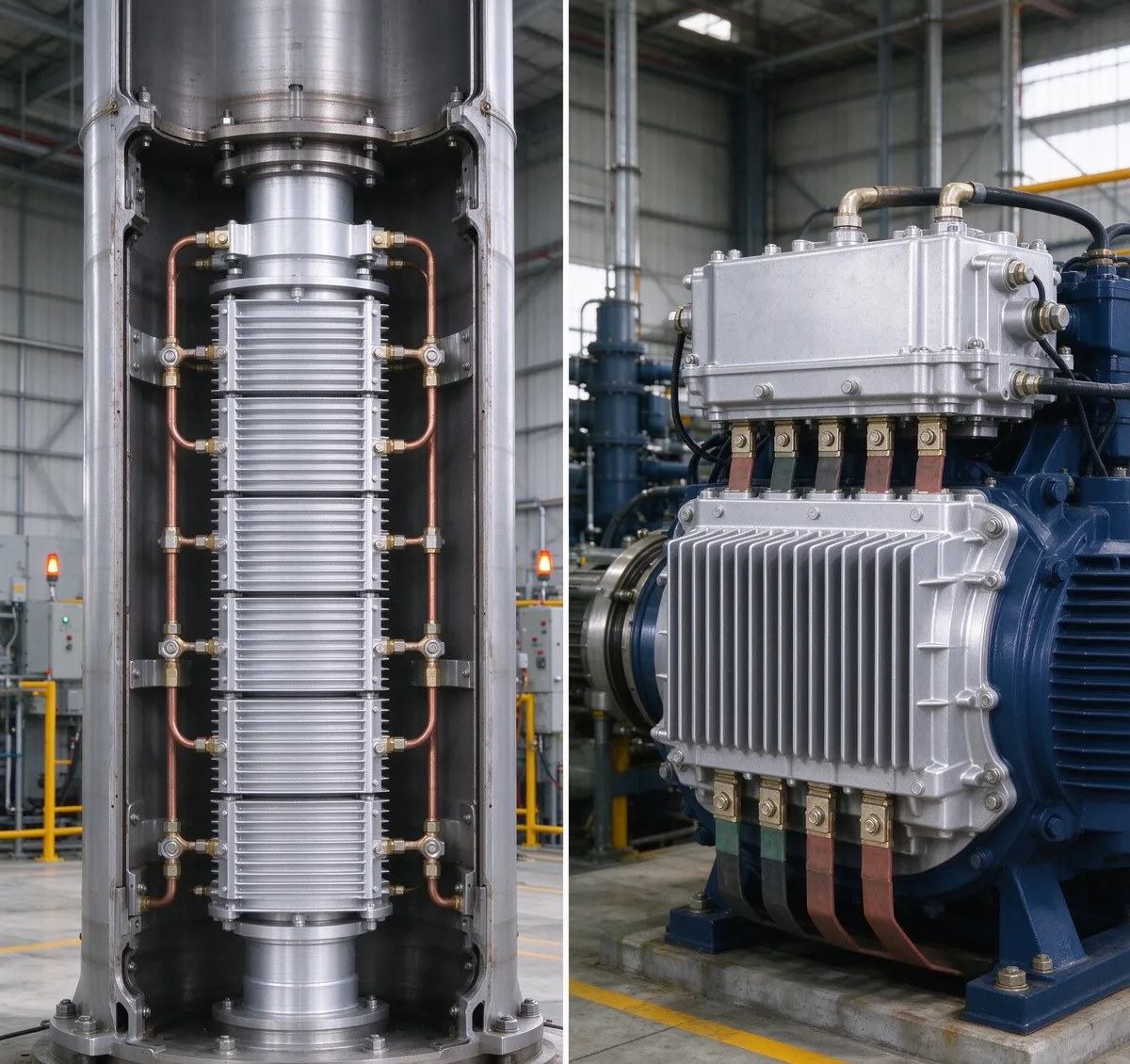
Distribution transformers (pole-mounted and pad-mounted) often use cast aluminum radiator fins or extruded 6063-T5 fin profiles welded or bolted to the enclosure for convective cooling. The fins increase surface area to dissipate heat from the transformer core and windings.
- Winding strip: 1050/1060 foil 0.1 – 0.3 mm, insulated coating, for distribution and dry-type transformers
- Dry-type enclosures: 5052-H32 or 6061-T6 2 – 6 mm, welded construction
- Cooling fins: 6063-T5 extrusions, welded or bolted to enclosure
- Advantages: 40 – 50% weight reduction vs. copper windings, corrosion resistance
Wind Power and Cable Management
Wind turbine towers and nacelles (generator housings) use aluminum for access platforms, cable trays, equipment mounts and protective covers. 6061-T6 aluminum extrusions and 5052-H32 sheet provide lightweight corrosion-resistant structures that withstand harsh offshore and onshore wind farm environments.
Cable trays and cable ladders for power plants, substations and industrial facilities are fabricated from 6063-T6 aluminum profiles or formed from 5052 sheet. Aluminum cable trays are lighter than steel, simplifying installation overhead and on cable racks. Ladder-type trays use extruded side rails with welded or bolted rungs; trough-type trays are roll-formed from sheet.
Control buildings, switchyards and substation enclosures use 6063-T5 architectural profiles for doors, windows, cable entry panels and ventilation louvers. The structures must withstand outdoor exposure, electrical hazards and potential wildlife intrusion while providing personnel access for maintenance.
- Wind turbine platforms: 6061-T6 extrusions, grating and handrails
- Cable trays: 6063-T6 or 5052 sheet, ladder-type or trough-type
- Enclosures: 6063-T5 profiles for doors, panels, louvers
- Electrical boxes: 5052-H32 sheet 1.5 – 3.0 mm, welded or formed
Power Sector Aluminum Demand
Southeast Asia is investing heavily in solar power and electrical grid expansion. Vietnam, Thailand, Malaysia and the Philippines are installing gigawatts of solar capacity annually, creating strong demand for 6063 solar mounting profiles. Regional electrical equipment manufacturers use 6101 and 1350 busbars and 6063 heat sinks for inverters, transformers and power distribution gear.
The Middle East has massive solar installations in UAE and Saudi Arabia, including utility-scale solar farms in desert environments. These projects require 6063-T6 mounting rails with anodized finishes to withstand sand abrasion, extreme heat and occasional humidity. Electrical substations and power plants use 6061 and 5052 sheet for enclosures and 6101 or 1350 busbars for power distribution.
Africa is expanding electrical grids and off-grid solar installations to improve electricity access. Nigeria, South Africa, Kenya and Egypt import 6063 solar mounting profiles, electrical conductor aluminum and 5052 enclosure sheet for rural electrification projects, mini-grids and commercial solar installations.
Need Power & Energy Grade Aluminum?
Contact our team for material specifications, certifications and export quotes.
Request a Quote