Anodizing vs Powder Coating for Aluminum Profiles: Complete Comparison
Aluminum profiles for architectural, automotive and industrial applications almost always receive a surface finish—either anodizing or powder coating. Both protect the aluminum and provide color and aesthetic appeal, but they work through completely different mechanisms.
This comprehensive comparison explains how each process works, compares their performance characteristics, costs, environmental impact and helps you choose the right finish for your application.
Quick Summary: Anodizing vs Powder Coating
| Property | Anodizing (Type II) | Powder Coating |
|---|---|---|
Process Type | Electrochemical conversion | Applied organic coating |
Typical Thickness | 10–25 µm | 60–120 µm |
Hardness | Very hard (harder than steel) | Moderate (softer than anodizing) |
Abrasion Resistance | Excellent | Good |
Corrosion Protection | Excellent (oxide layer) | Excellent (barrier coating) |
UV Resistance | Excellent (oxide is inorganic) | Good (degrades slowly over time) |
Color Options | Limited (clear, bronze, black, gold) | Unlimited (any RAL/Pantone color) |
Appearance | Metallic, transparent | Opaque, matte or gloss |
Cost (relative) | 1.0× (baseline) | 0.7–0.9× |
Best For | Architectural, high-wear, coastal | Color-critical, decorative, cost-sensitive |
How Anodizing Works
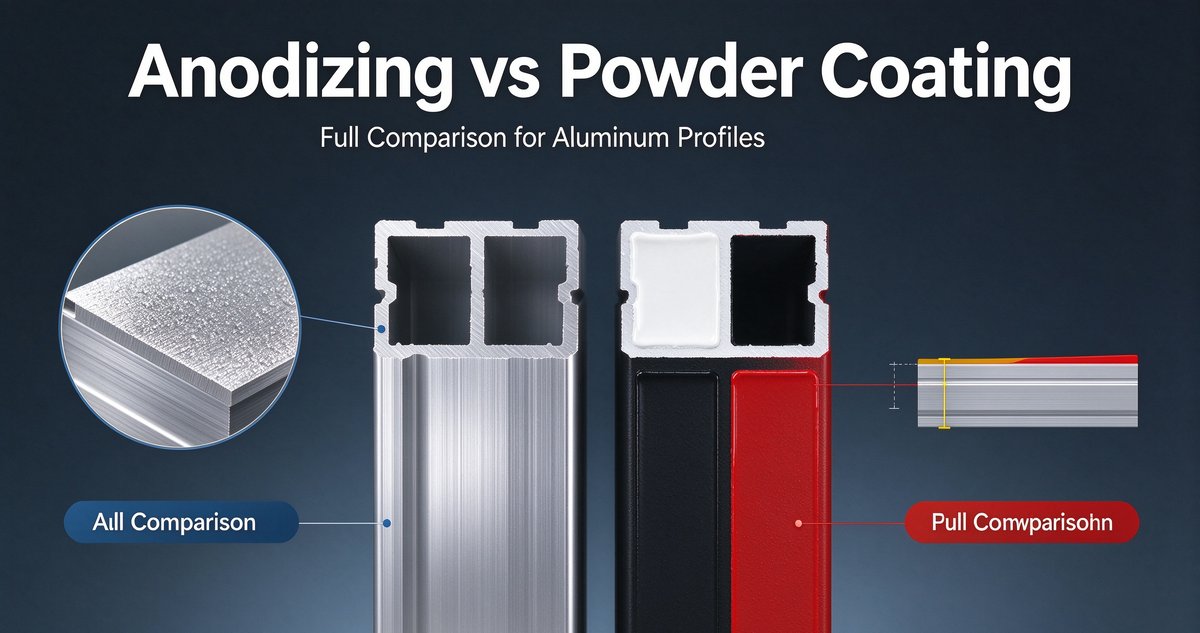
Anodizing is an electrochemical process that converts the aluminum surface into aluminum oxide (Al₂O₃). The aluminum part is immersed in an acid electrolyte (typically sulfuric acid) and connected as the anode (+) in an electrical circuit. An electric current causes the aluminum surface to oxidize, forming a porous oxide layer that grows into the aluminum substrate.
The oxide layer is integral to the aluminum—it is not a coating applied on top, but rather a transformation of the surface aluminum into oxide. This makes anodizing extremely durable and adherent; the oxide cannot peel or flake off because it is part of the base metal.
Type II anodizing (sulfuric acid anodizing) produces oxide layers 10–25 µm thick and is the standard for architectural and industrial aluminum. Type III (hard anodizing) produces thicker oxide layers (25–100 µm) for wear-resistant applications.
After anodizing, the porous oxide can be dyed with organic or inorganic dyes, then sealed (typically in boiling water or nickel acetate solution) to close the pores and lock in the dye. Clear anodizing (no dye) leaves the natural metallic aluminum appearance visible through the transparent oxide layer.
How Powder Coating Works
Powder coating applies a dry powder (thermosetting polymer resin) to the aluminum surface using electrostatic spray, then cures it by baking in an oven. The powder particles are electrically charged and attracted to the grounded aluminum part, forming an even coating. The part is then baked at 180–200°C for 10–20 minutes, causing the powder to melt, flow and chemically cross-link into a hard, durable finish.
Powder coating is an applied organic coating sitting on top of the aluminum substrate. The coating thickness is typically 60–120 µm—much thicker than anodizing. Common powder coating chemistries include polyester, polyester-TGIC, polyurethane and epoxy, each with different performance characteristics.
PVDF (polyvinylidene fluoride) powder coatings (also called fluoropolymer or Kynar powder) are a premium powder coating with exceptional UV and weather resistance, used for architectural aluminum in harsh environments. PVDF powder is more expensive but significantly outperforms standard polyester powder in outdoor durability.
Durability and Wear Resistance
Anodizing provides superior abrasion and wear resistance. The aluminum oxide layer is extremely hard—harder than many steels (200–450 HV depending on anodizing type). Anodized aluminum resists scratching, scuffing and wear far better than powder coating. This makes anodizing ideal for high-traffic architectural applications (door frames, handrails, escalator panels) and mechanical parts subject to sliding or contact wear.
Powder coating is softer and more prone to scratching. The organic coating has lower hardness (~50–100 HV depending on chemistry) and can be scratched by sharp objects or abrasive contact. However, powder coating thicker layer provides good impact resistance—it absorbs impacts better than the brittle anodized oxide.
Chip resistance: Powder coating, being thicker and slightly flexible, resists chipping from impacts better than anodizing. Anodized oxide can crack under severe impact, though it will not peel because it is integral to the substrate.
Corrosion Protection
Both anodizing and powder coating provide excellent corrosion protection for aluminum, but through different mechanisms.
Anodizing forms a dense, impermeable aluminum oxide layer that isolates the underlying aluminum from the environment. Properly sealed anodized aluminum resists saltwater, acid rain, industrial pollution and most chemicals. Anodizing is specified for coastal buildings (within 5 km of the ocean) and marine environments where salt spray is a concern.
Powder coating provides a thick organic barrier that prevents moisture, oxygen and corrosive species from reaching the aluminum. Powder coating corrosion performance depends heavily on surface preparation—chemically pretreated (chromate or zirconium conversion coating) aluminum has much better adhesion and corrosion resistance than powder applied to bare aluminum.
Best practice: For maximum corrosion protection, anodize the aluminum first (thin anodizing, 5–10 µm) then apply powder coating over the anodized surface. This "anodize + powder" combination is used for high-end architectural aluminum in aggressive environments.
UV and Weather Resistance
Anodizing has excellent UV resistance because the aluminum oxide layer is an inorganic ceramic material that does not degrade under UV exposure. Clear and bronze anodized finishes will not fade or chalk, even after decades of outdoor exposure. Black anodized finishes may fade slightly over many years if dyed with organic dyes (inorganic dyes like cobalt or nickel are more UV-stable).
Powder coating UV resistance depends on the resin chemistry. Standard polyester powder coatings will fade and chalk over 5–10 years of outdoor exposure. PVDF (Kynar) powder coatings are much more UV-resistant and are warranted for 20–30 years in architectural applications. AAMA 2605 (PVDF) coatings are the standard for high-performance architectural aluminum in North America.
For outdoor applications in high-UV environments (tropical, desert, high-altitude), anodizing or PVDF powder coating is recommended. Standard polyester powder is acceptable for temperate climates or semi-sheltered applications (under eaves, shaded areas).
Appearance and Color Options
Anodizing produces a metallic, transparent finish. The aluminum grain structure remains visible through the oxide layer, giving anodized aluminum its characteristic brushed-metal or satin appearance. Color options are limited: clear (natural silver), bronze, black, champagne (gold), and a few other colors achievable with organic or inorganic dyes. Bright colors (red, blue, green) are possible but less common and less UV-stable.
Powder coating produces an opaque, solid-color finish available in virtually any color—thousands of RAL and Pantone colors, plus custom matches. Powder coating hides the aluminum surface completely, so surface defects, weld marks and grain structure are not visible. Gloss levels range from matte (5–15% gloss) to high-gloss (>80% gloss).
Texture: Anodizing maintains the original surface texture (mill finish, brushed, polished). Powder coating can add texture—smooth, fine texture, wrinkle, hammer-tone, metallic flake—for decorative effects.
Consistency: Anodizing color can vary slightly between extrusion lots due to alloy composition and surface preparation differences. Powder coating color is highly consistent batch-to-batch.
For architectural projects requiring specific brand colors or color matching, powder coating is the only practical choice. For projects requiring a metallic, premium appearance with visible aluminum grain, anodizing is preferred.
Cost Comparison
Powder coating is typically 10–30% less expensive than anodizing for architectural profiles, due to simpler equipment, lower energy consumption and fewer process steps. However, the cost gap narrows for small-batch jobs and complex profiles.
Approximate finishing costs (2026, high-volume architectural profiles):
- Type II clear anodizing (Class I, 18 µm): $1.50–2.50 USD per kg of aluminum
- Type II color anodizing (black, bronze): $1.80–3.00 USD per kg
- Standard polyester powder coating: $1.20–2.00 USD per kg
- PVDF (Kynar) powder coating: $2.00–3.50 USD per kg
Setup and masking costs can dominate for small batches. Anodizing typically has higher minimum charges due to the chemical bath process.
For large architectural projects (curtain walls, window systems), the cost difference between anodizing and standard powder coating is significant. For premium projects specifying PVDF powder, anodizing and PVDF are cost-competitive.
Environmental Impact
Anodizing uses sulfuric acid electrolytes and generates acidic wastewater that must be neutralized and treated before discharge. Dye baths and sealing baths also generate wastewater. Modern anodizing plants recycle and treat their process water, but the process still has higher water consumption and chemical disposal requirements than powder coating.
Powder coating generates minimal liquid waste—the primary waste is overspray powder, which can be reclaimed and reused (70–95% transfer efficiency). Curing releases small amounts of volatile organic compounds (VOCs), but powder coatings have much lower VOC content than liquid paints. Powder coating is generally considered more environmentally friendly than liquid paint or anodizing.
Both processes consume energy (electricity for anodizing, natural gas or electricity for powder curing ovens). Carbon footprint is comparable.
When to Choose Anodizing
Common anodized aluminum products: 6063 architectural profiles for curtain walls and window systems, 6061 structural extrusions, 5052 sheet for marine and architectural cladding.
Coastal and marine environments: Buildings within 5 km of the ocean, offshore platforms, marine hardware.
High-wear applications: Door frames, handrails, escalator cladding, high-traffic architectural surfaces.
Metallic appearance: Projects requiring the premium look of brushed or polished aluminum.
Electrical conductivity: Anodized aluminum retains some electrical conductivity; powder coating is an insulator.
Heat dissipation: Anodized aluminum (especially black anodizing) has good thermal emissivity for heat sinks.
Extreme UV exposure: Desert, tropical, high-altitude environments where UV is intense.
Food contact: Anodized aluminum is approved for food contact and is easy to clean and sterilize.
When to Choose Powder Coating
Common powder coated aluminum products: 6063 window and door frames, 5052 architectural cladding, aluminum composite panels, 6061 structural frames.
Specific colors: Projects requiring brand colors, color matching, or colors not achievable by anodizing.
Opaque finish: Hiding surface defects, weld marks, or dissimilar materials (aluminum + steel frames).
Cost-sensitive projects: Commercial and residential applications where budget is a primary concern.
Indoor applications: Interior architectural aluminum where UV exposure is minimal.
Decorative finishes: Textured, metallic flake, or special-effect finishes.
Impact resistance: Parts subject to impacts, dings or rough handling during installation or use.
Fast turnaround: Powder coating lines typically have faster throughput than anodizing.
Hybrid Approach: Anodize + Powder Coating
For the ultimate in corrosion protection and appearance, some high-end architectural projects use thin anodizing (5–10 µm) as a substrate preparation, then apply powder coating over the anodized surface. This combines anodizing corrosion resistance with powder coating color flexibility.
The thin anodized layer provides an excellent base for powder adhesion and acts as a secondary corrosion barrier if the powder is scratched or damaged. This is common for coastal high-rises and buildings in aggressive industrial environments.
Maintenance and Repair
Anodized aluminum requires minimal maintenance—periodic washing with mild detergent and water is sufficient. Anodizing cannot be touched up; if damaged, the part must be stripped and re-anodized (not economical for installed architectural aluminum).
Powder coated aluminum also requires only periodic washing. If scratched or chipped, powder coating can be touched up with matching powder or liquid paint, though color matching can be difficult. Severely damaged sections can be stripped and re-coated more easily than anodizing.
Both finishes are extremely durable and will last 20–40+ years with minimal maintenance when properly specified for the environment.
Conclusion
Anodizing is the best choice for high-wear, coastal, marine and extreme-UV applications, and when a premium metallic appearance is desired. It provides superior abrasion resistance, corrosion protection and UV stability. The trade-offs are limited color options and higher cost.
Powder coating is the best choice for color-critical projects, decorative applications, and cost-sensitive commercial and residential buildings. It offers unlimited colors, good durability and lower cost. PVDF powder coatings provide excellent outdoor performance rivaling anodizing.
For most architectural aluminum—6063 curtain wall and window profiles, 5052 cladding panels—both finishes are viable. The choice comes down to aesthetic preference (metallic vs solid color), specific color requirements, budget and environmental exposure. Both will protect the aluminum and provide decades of service when properly specified.