Aluminum is the material of choice for modern building envelopes—curtain walls, windows, doors, cladding and roofing—due to its light weight, strength, corrosion resistance and low maintenance. Extruded aluminum profiles enable architects to create energy-efficient, weather-tight building skins that last 40+ years with minimal upkeep.
We supply architectural aluminum profiles, sheet and panel systems to window and door manufacturers, curtain wall contractors, facade specialists and building product distributors across Southeast Asia, Middle East and Africa.
Windows and Doors
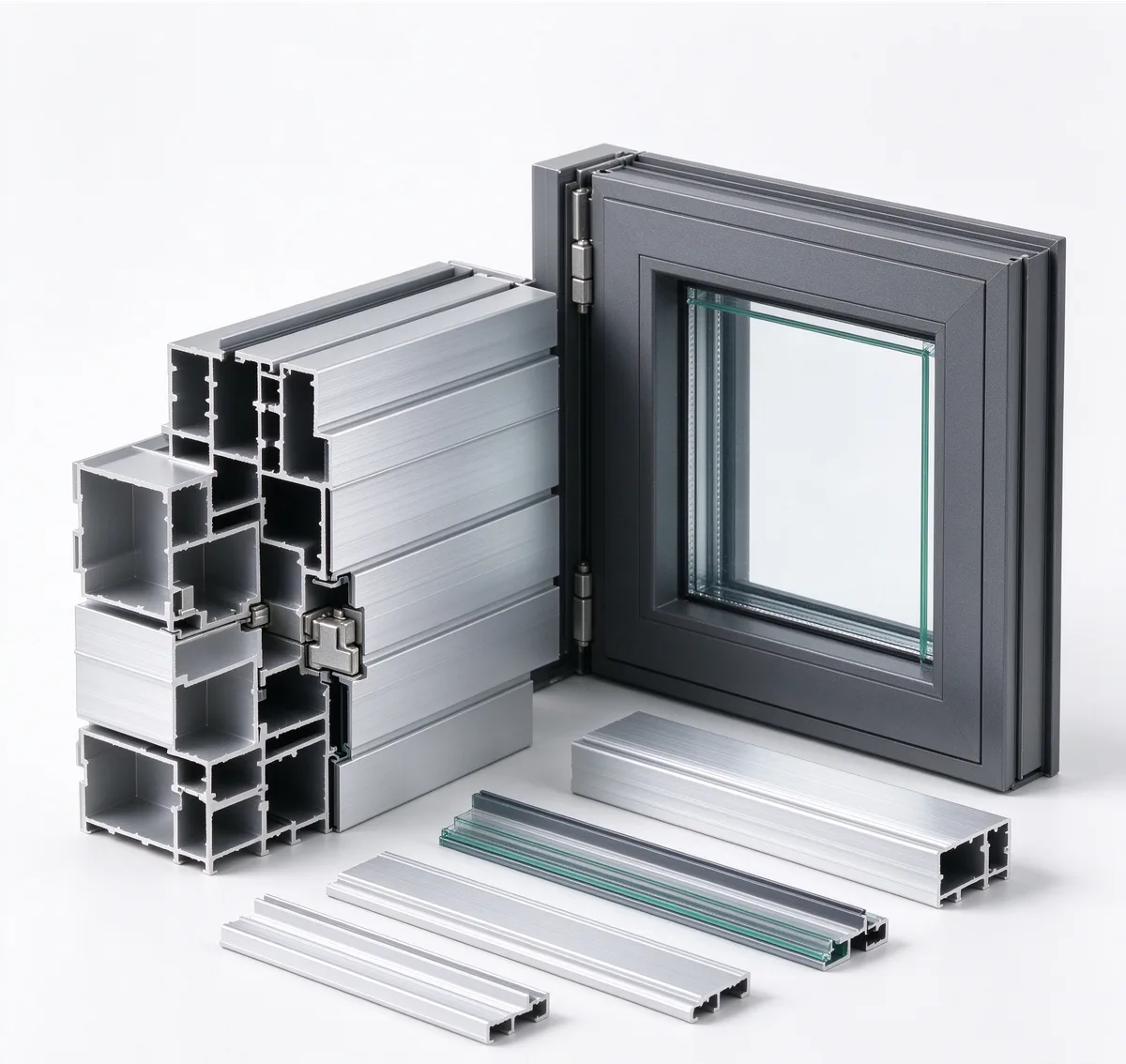
Residential and commercial window and door frames are extruded from 6063-T5 or 6063-T66 aluminum. 6063 offers the best combination of strength, extrudability into complex hollow profiles, and surface finish for anodizing or powder coating. T5 temper (cooled from extrusion and aged) is used for general residential windows; T66 temper (solution heat treated and aged per GB/T 5237) is specified for commercial and high-rise projects requiring higher strength.
Window frame profiles are typically 1.4 – 2.0 mm wall thickness for residential applications, and 2.0 – 3.0 mm for commercial curtain wall windows. China door and window standard GB/T 8478-2020 requires a base-metal wall thickness of at least 1.8 mm for the main profiles of external windows and 2.2 mm for external doors. Thermal-break windows insert a polyamide (nylon) strip between inner and outer aluminum profiles to reduce heat transfer and meet energy codes.
Surface finishes include anodizing (clear, bronze, black, champagne) per AAMA 611 Class I (≥18 µm for outdoor exposure), powder coating per AAMA 2604 (polyester) or AAMA 2605 (PVDF fluoropolymer for coastal / high-UV areas), and electrophoresis coating (common in Chinese market). All 6063 window profiles accept these finishes well due to its clean, smooth extruded surface.
- Residential windows: 6063-T5 1.4 – 2.0 mm wall (≥ 1.8 mm for external windows under GB/T 8478), anodized or powder coated
- Commercial windows: 6063-T66 2.0 – 3.0 mm wall, Class I anodizing
- Thermal-break windows: 6063-T5/T66 with polyamide inserts (14.8 – 24 mm)
- Doors: 6063-T5/T66 ≥ 2.2 mm wall for external doors (GB/T 8478), powder coated or anodized
Curtain Wall Systems
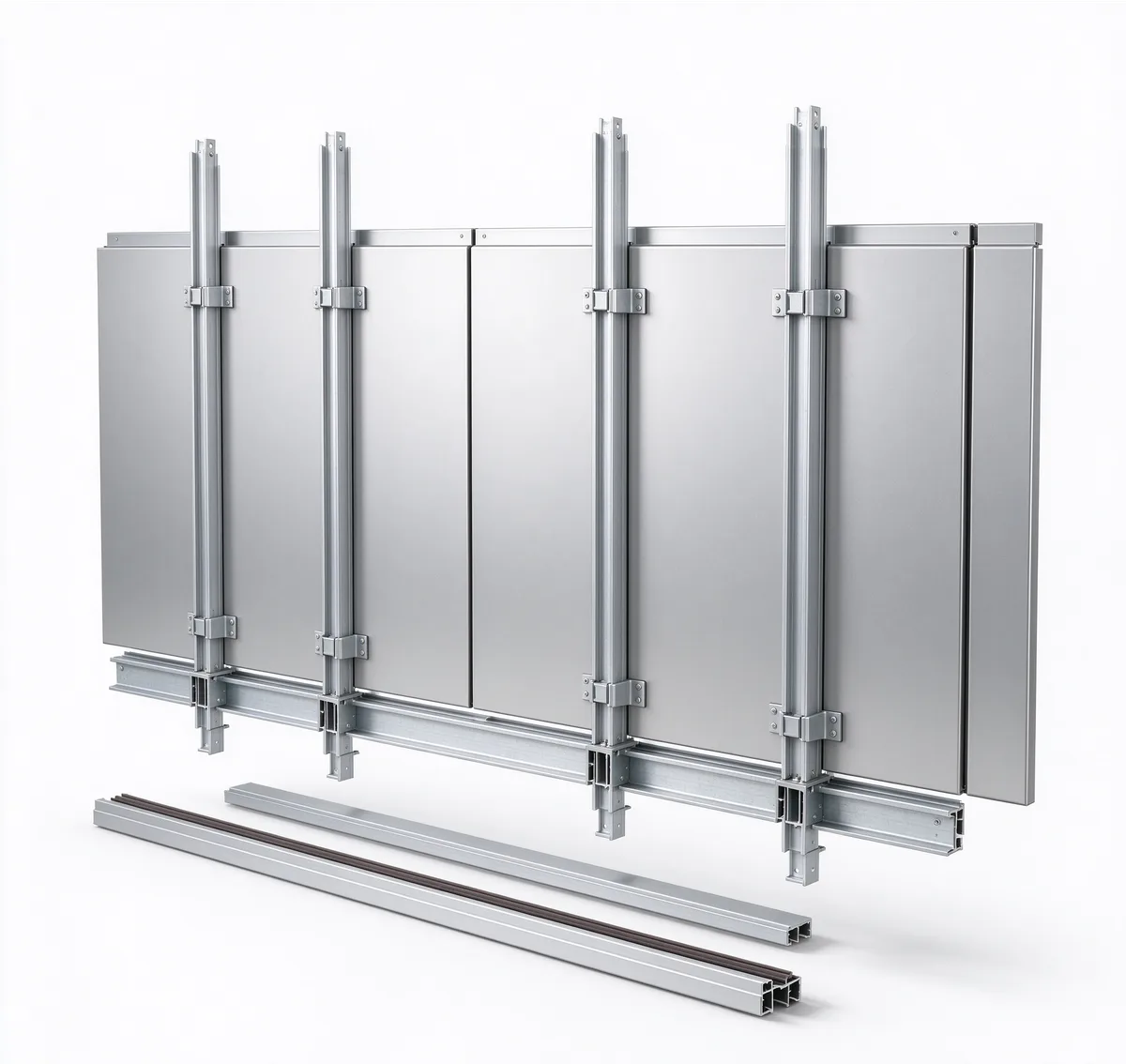
Curtain walls—non-structural exterior cladding systems hung from the building structure—use aluminum framing to support glass, stone or metal panels. 6063-T5 or 6063-T6 profiles form the mullions (vertical frames), transoms (horizontal frames) and pressure plates that hold glazing in place. Curtain wall profiles are heavier than window profiles, typically 2.5 – 5.0 mm wall thickness, with large cross-sections (100 – 250 mm depth) to span multiple floors.
Chinese standard JGJ 102 specifies minimum wall thickness for curtain wall mullions: open-section profiles ≥3.0 mm, closed-section profiles ≥2.5 mm. High-rise projects in seismic zones or high wind areas may use 6061-T6 profiles for critical structural mullions where higher strength (≥260 MPa vs. ~205 MPa for 6063-T6) is required.
Curtain wall profiles are typically anodized to AAMA 611 Class I (architectural anodizing, ≥18 µm) in clear, bronze or champagne finishes to match the building aesthetic. Some projects specify PVDF fluoropolymer powder coating for maximum weather resistance and color stability in coastal or high-pollution environments.
- Mullions: 6063-T6 or 6061-T6, 100 – 250 mm depth, 2.5 – 5.0 mm wall
- Transoms: 6063-T6 custom profiles, typically 80 – 150 mm depth
- Pressure plates: 6063-T5/T6 snap-on or screw-fixed glazing retainers
- Finish: AAMA 611 Class I anodizing (≥18 µm) or AAMA 2605 PVDF coating
Aluminum Cladding and Facades
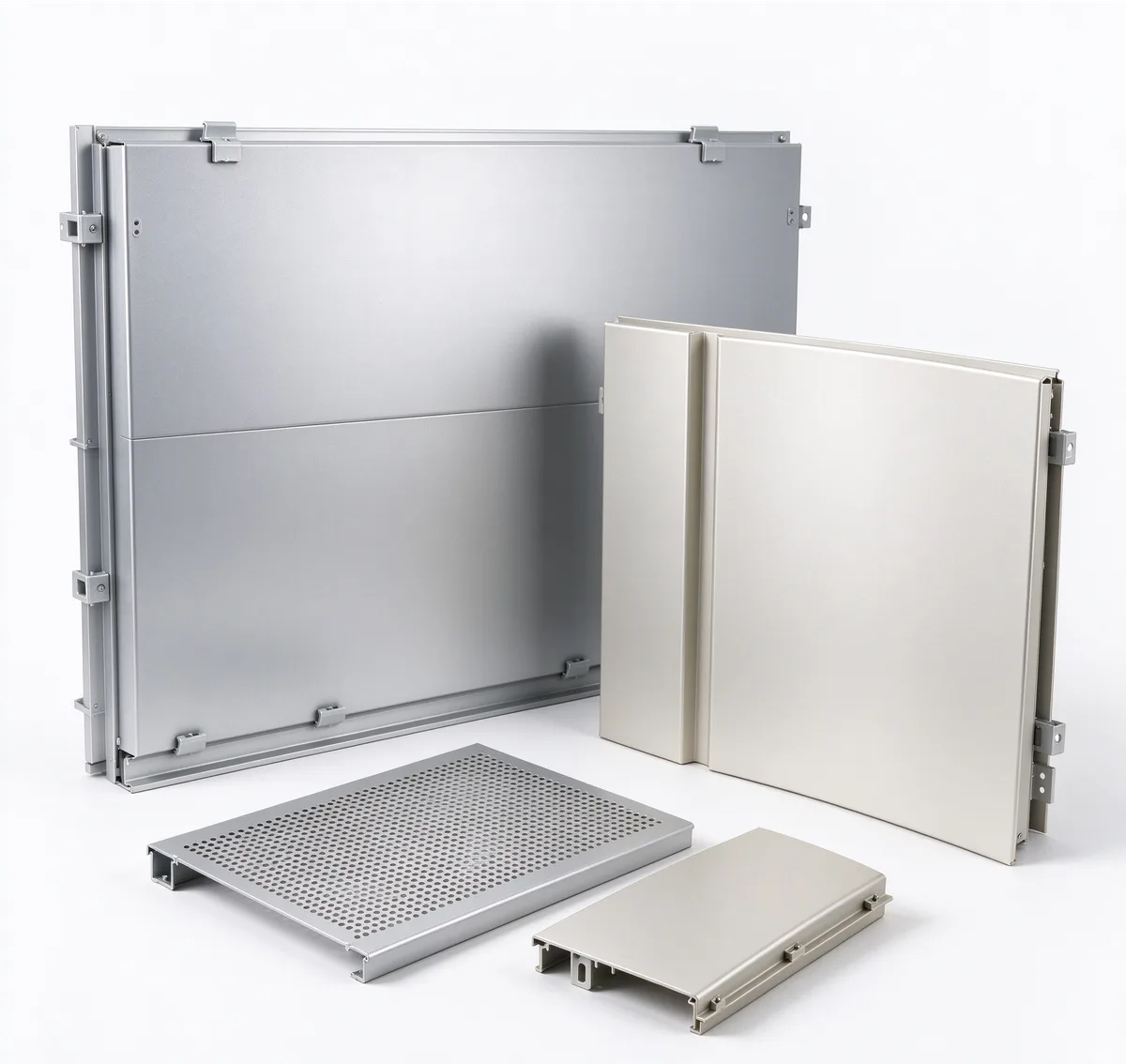
Aluminum cladding panels create ventilated facades, rainscreen systems and decorative building skins. 5052-H32 or 3004-H34 aluminum sheet is widely used for flat or lightly formed cladding panels in 1.5 – 3.0 mm thickness. 5052 offers good formability for curved or folded panels and excellent corrosion resistance for coastal climates.
Aluminum composite panels (ACP or ACM) sandwich a polyethylene or fire-resistant mineral core between two thin aluminum skins (typically 0.3 – 0.5 mm 3003, 5005 or 5052 sheet). A 4 mm ACP panel weighs roughly 5.5 – 8 kg/m², is easy to fabricate and is available in almost any color with PVDF coating. However, PE-core ACP is combustible and is banned on high-rise facades in many jurisdictions; fire-rated (FR or A2) mineral-core ACP is required there.
Perforated and expanded aluminum sheet is used for decorative screens, sunshades and privacy facades. 5052 or 3003 sheet 1.5 – 3.0 mm thick is perforated or expanded, then anodized or powder coated. The open area allows airflow and light while providing solar shading and architectural interest.
- Flat panels: 5052-H32 1.5 – 3.0 mm, folded or brake-formed, PVDF coated
- Curved panels: 5052-H32 roll-curved, or 5052-O for tight radii (5052 is non-heat-treatable, so O-temper panels stay soft after forming)
- ACP skins: 3003, 5005 or 5052 0.3 – 0.5 mm, PVDF finish
- Perforated screens: 5052 1.5 – 3.0 mm, custom perforation patterns
Roofing and Flashing
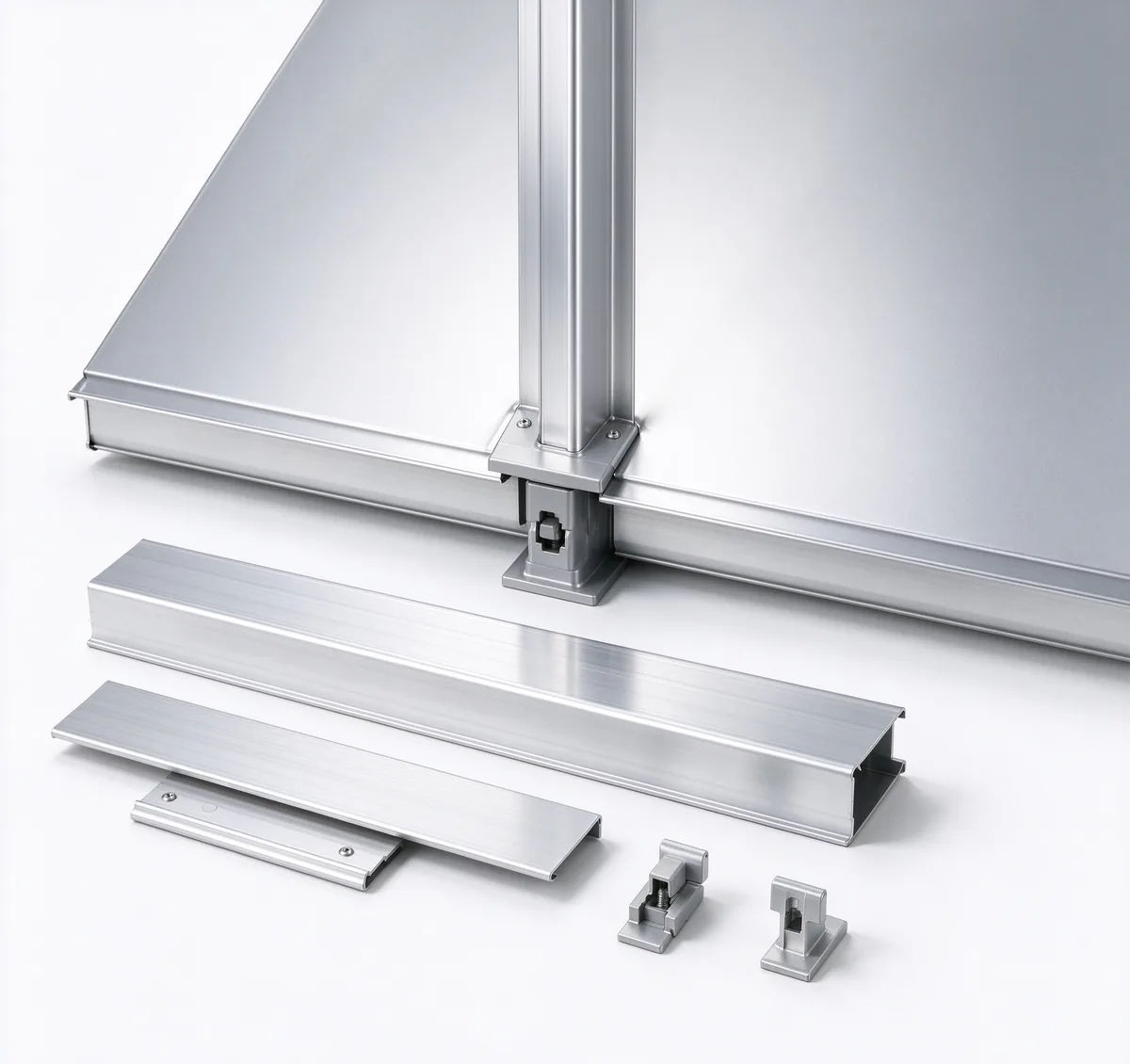
Standing seam metal roofing uses aluminum for its light weight, weather resistance and ability to form watertight seams. 3004-H34 or 3105-H34 sheet in 0.5 – 0.7 mm thickness is roll-formed into standing seam profiles. 5052-H32 sheet is used for coastal sites where higher corrosion resistance is required. These alloys are supplied pre-painted with PVDF fluoropolymer coating (Kynar 500 / Hylar 5000) in a wide range of colors, warranted for 20 – 30 years against fading and chalking.
Aluminum roofing panels are typically 0.5 – 0.7 mm thick for standing seam and architectural shingle profiles. Thicker gauges (0.7 – 1.0 mm) are used for structural applications or exposed fastener roofs. The material is naturally corrosion-resistant and does not rust, though bare aluminum will oxidize to a dull gray patina over time.
Roof flashing, gutters, downspouts and trim are formed from 3003, 3105 or 5052 sheet 0.5 – 1.0 mm thick. Flashing is typically supplied in mill finish, anodized or painted to match the roof or building color scheme. Gutters are roll-formed on site or brake-formed from sheet stock.
- Standing seam roofing: 3004-H34 or 3105-H34 0.5 – 0.7 mm, or 5052-H32 for coastal sites, PVDF coated
- Shingles / tiles: 3003, 3105 or 5052 sheet 0.5 – 0.7 mm, pre-painted
- Flashing: 3003 or 5052 sheet 0.5 – 1.0 mm, mill finish or painted
- Gutters: 3105 or 5052 sheet 0.7 – 1.0 mm, roll-formed on site or brake-formed
Construction Aluminum Markets
Southeast Asia has a booming construction sector driven by urbanization and infrastructure investment. Vietnam, Malaysia, Thailand, Indonesia and the Philippines import large volumes of 6063 window and curtain wall profiles, 5052 cladding sheet and architectural panel systems. Local fabricators extrude profiles domestically but often import premium anodized and powder-coated profiles for high-end projects.
The Middle East, particularly UAE and Saudi Arabia, has massive construction markets for high-rise, commercial and infrastructure projects. The region specifies high-performance finishes (AAMA 2605 PVDF, Class I anodizing) and thick-wall 6063-T6 or 6061-T6 profiles to withstand extreme heat, sandstorms and coastal salt exposure. Thermal-break curtain walls are essential for energy efficiency in air-conditioned buildings.
Construction in Africa is growing fastest in Nigeria, South Africa, Kenya and Egypt. These markets import 6063 window and door profiles, 5052 roofing and cladding sheet, and aluminum composite panels. Local fabricators serve residential and commercial window markets, while large infrastructure projects import finished curtain wall systems.
Need Construction Grade Aluminum?
Contact our team for material specifications, certifications and export quotes.
Request a Quote